Independent Sleepers · One Night
One night can change how your whole family sleeps

A quiet moment at home, before the night begins.
I am Selina, a pediatric sleep coach, a newborn care specialist, and a mom of two. I help babies and children from birth to age five learn to sleep, gently, with a plan made for your baby and no one else.
Stay with me for one night, from bedtime to morning. I will show you what nights look like when families first reach out to me, what we change together, and how those nights end.
Too tired to scroll? I understand. Go straight to what you need: my packages, my guides and course, the SOS call for one focused problem, answers to the questions I hear most, or a free discovery call to talk about whether coaching fits your family. Not sure where to start at all? Take my Sleep Quiz and I will point you to your best next step.
New: my Sleep Quiz
Not sure what your family needs?
Answer a few questions about your little one and I will point you to your best next step, whether that is a guide, my course, a call together, or coaching. It takes about two minutes, there is a question in there for twin parents too, and I will email your result to you as well so you have it when you need it at 2am.
What families tell me when they first reach out
When families first reach out to me, this is what I hear, again and again.
My baby wakes all night long. Two wakes, three wakes, sometimes every hour.
My baby will only fall asleep on me, or feeding, or rocking, or bouncing on a yoga ball.
The night feeds never seem to end, and neither of us knows which ones my baby still needs.
We share our room, or our bed, and I do not know how to make the move to a crib.
Naps last thirty minutes unless I hold my baby the whole time.
I never know if the schedule is right, and one missed window can undo the whole day.
And so many parents tell me about the five in the morning wake that will not move, long after everything else has improved.
If you are nodding along, you are in the right place. None of this means your baby cannot learn to sleep. It means your baby needs a plan that fits who they are.
Selina’s Night Note
I do not start with a method. I start with your baby. Before we change a single thing, I want to know how your baby falls asleep tonight, where they sleep, what the day looks like, and what kind of little person they are. Two babies can wake at the exact same times for completely different reasons, and they will not need the same plan.
7:00 PM
Bedtime, and falling asleep is the hardest part
Aisha was almost six months old when her family reached out to me. Her wakings had climbed to around three a night, and falling asleep was their biggest struggle of all. At night, her parents rocked and sang her to sleep, and she slept in their room, helped for every stretch of sleep.
Her plan set a gentle goal: fall asleep without that help, in her own crib.
Here is the part I want you to remember. Partway through our work together, I changed Aisha’s plan. The first approach was not the right fit for her, so I restructured it, and later I changed it again when I saw that she resisted patting at night. We let the patting go completely, kept the snuggle, and moved her last wake window. A plan should bend around your baby. Your baby should never have to bend around a plan.
There is no one method
I start with your baby.
Every plan I write begins with three things: your baby’s temperament, your family situation, and your schedule. The sleep setup matters too, whether that is a crib, a floor bed, or your room for now.
From there, I choose the approach that fits. For one baby that is Cribside Comfort, where I sit close and settle in the crib with touch that slowly fades. For another it is gradual check ins. For another, pick up put down and contact fading, or a schedule and routine reset before we change anything else. Cribside Comfort is one tool I use. It is never the whole toolbox.
And I will never ask you to leave your baby alone to cry. When settling takes time, the frames I give families run between 5 and 15 minutes, chosen for your baby’s temperament and always inside your comfort. If an approach is not working for your baby, we change the approach. That is not failure. That is the work.
8:29 PM
Night one, live from the nursery doorway
This is what night one can look like with me in your corner, in real time, from the nursery doorway. This is a shortened version of a real chat with this family.
Selina’s Night Note
A false start, where a baby wakes an hour or so after bedtime and struggles to go back down, is one of the toughest moments of the night. It does not mean the evening failed. Most of the time it is information about the day that came before it, and it gives us something clear to adjust tomorrow.
9:00 PM
Night one was brutal, and night seven he was weaned
Shai was five months old and waking four times a night. He was rocked, held, fed, and snuggled to sleep for every stretch, and most nights ended with him in his parents’ bed. His goal was a big one: settle himself and sleep ten to eleven hours in his crib.
I will be honest with you, because Shai’s parents lived it. His first night was brutal. His second night was dramatically better. By day three and four he was sleeping independently in his crib, and on night seven he had his first fully weaned night.
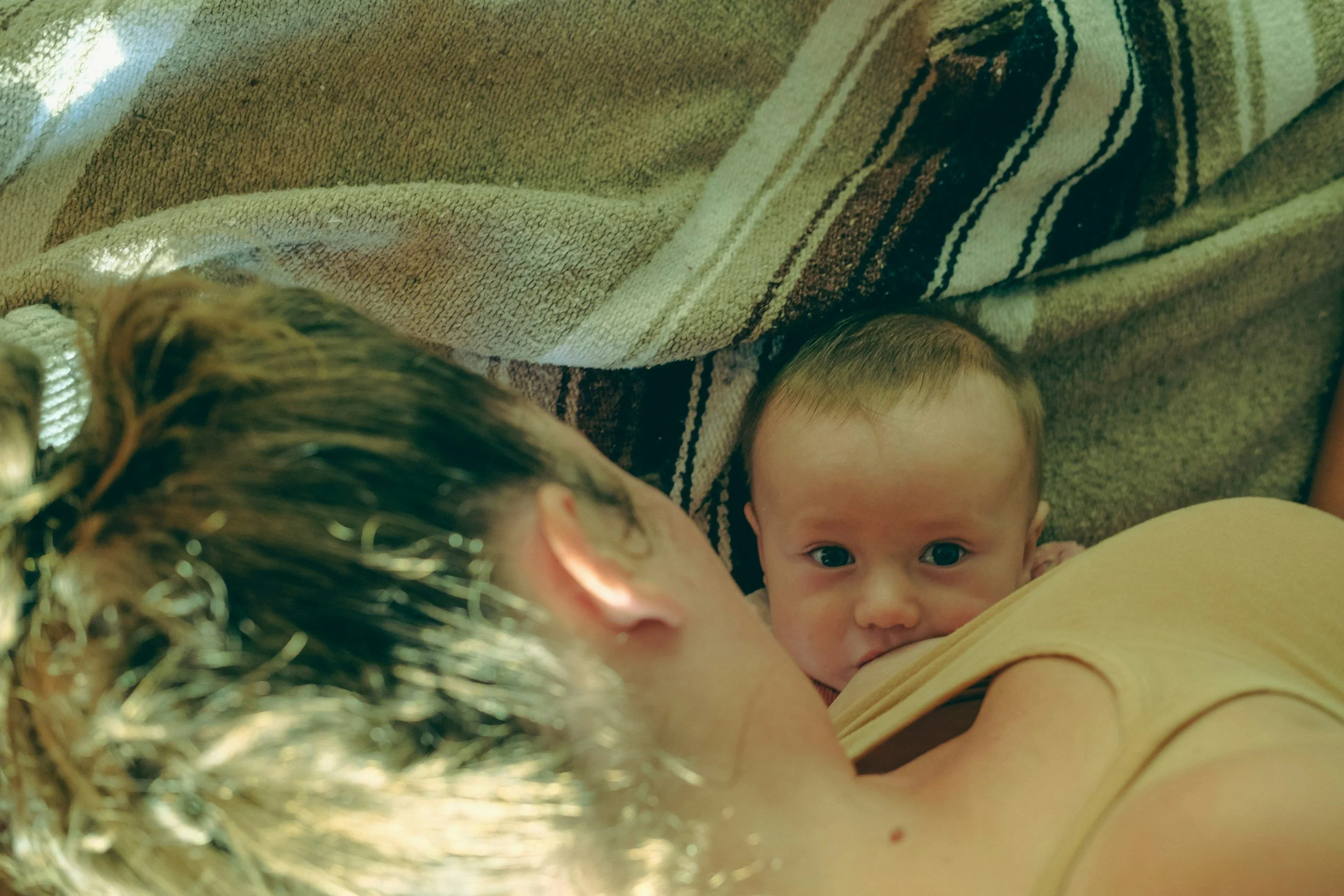
Not every night moves that fast. But I want you to see what can happen inside a single week when the plan fits the baby. Midnight Clara’s story, featured. Clara’s intake form said one word about her night wakings. Eight. She stayed latched all night, with unlimited feedings, in an open floor bed, while her grandmother helped with daytime care and contact naps. Her mom wanted to try weaning cold turkey, because slow weaning was harder for Clara, and I respected that call. So we went from unlimited feedings to two. Then to one. Eight wakes to one feed is not a small thing. It is a whole family sleeping again. In the middle of the night, the question I get most is also the simplest: do I feed, or do I resettle? There is no single answer that fits every baby. It depends on your baby’s age, their day, and what we are working on together. That is exactly why we decide it in the plan, calmly, in daylight — so at two in the morning you are not trying to work it out alone and exhausted.Eight wakes, and latched all night
Selina’s Night Note
3:00 AM
The plan that kept the feeds on purpose
Poppy was seven months old, waking three to five times a night, wanting to nurse or be carried to fall asleep. She slept in her mother’s bed, stayed latched most of the night, and after three in the morning she woke every thirty minutes to latch again.
Poppy is growing along a lower percentile, so her plan does something important. It keeps her night feedings. On purpose. Her goal is longer stretches and independent naps with her feeds included, not sleeping through at all costs.
I will never trade your baby’s needs for a tidier result. Sometimes the right plan is the slower one, and I will tell you when I think it is.
Selina’s Night Note
Parents rarely struggle with the theory of sleep. They struggle with tonight. What time is bedtime after that short nap? Do I wake him from this one? Is two hours and five minutes a wake window or a clock time? Inside coaching, that is the daily work: your numbers, recomputed for your baby’s actual day, so you never have to guess at midnight.
5:00 AM
Two feet of distance
Luca was seven and a half months old and waking two to three times a night. His mum started by lying beside him on his floor bed. Then she sat up beside him. Then, on night six, she added distance for the first time.
She sent me her log, and I keep it because it says everything. “I sat 2 feet away and only patted 3 times for 30 seconds each and he was asleep in 6 min!!”
Before that week, Luca had been rocked for an hour for every waking, and all of his sleep was contact sleep. During our work he took crib naps of over an hour, slept a stretch of six hours and forty minutes, and his family prepared to move out of his room. Luca shows why I ask families to trust the ladder: one small, kind step at a time.
7:00 AM
The morning after, and a plan that changed with the daylight
Remember Aisha, from the start of our night? Here is the morning after one of her nights, shortened from our real chat. Watch what happens: her plan changed in daylight, because of what her night told us.
Why this business exists

Selina with her family, including Elliot and Josie.
I became a sleep coach because of my own son.
When Elliot was a baby, we sleep trained him using aggressive cry it out information we found on the internet. It was really difficult to manage, and I carry regrets from that experience. I knew there had to be a gentler way for a baby to learn to sleep, and for a family to feel supported while it happened. That is why I created Independent Sleepers.
With my daughter Josie, everything was different, because by then I was already a sleep coach. It really helped us get through her sleep, trying different methods to find what fit her, and she was sleeping perfectly at four months after just a week or two.
I have now supported more than 600 families. I am a pediatric sleep coach and a newborn care specialist, and above all I am a mom who has sat where you are sitting, watching the clock at three in the morning and wondering if anyone sleeps again. You will. Let me show you how.
Ways we can work together
There are a few ways we can work together, and the right one depends on your baby and how much support you want beside you.
My coaching packages walk with you through the whole journey, with a personal plan for your baby and my support while you use it. Basic is $349.99, Comprehensive is $649.99, and Premium is $749.99, and every price is listed in full on my packages page before we ever speak. Payment plans are available, just ask me about them on our discovery call. Night one support until your baby is asleep, with me there by text through that first bedtime, the part of night one most parents dread most.
If you have one focused thing you want to fix, my SOS call is a thirty minute call for exactly that, and it is $99.99. If we have worked together before and life has knocked sleep sideways, my Refresher brings us back together for $179.99.
If you would rather learn at your own pace, my guides and my course give you my methods in writing, matched to your baby’s age and your exact struggle. My Sleep Quiz can point you to the right one in a couple of minutes. Twin parents, you are covered too: Start Strong closes with a twin section and twin FAQs, and Chapter 5 of the course covers twin training. You can also pair the course with an SOS call for $119.99.
And if you are not sure yet, start with a free discovery call. It is a free 15 minute fit check for coaching, a short chat with me about your family and whether coaching is a fit. It is not free advice. There is no pressure in it, only clarity about your next step.
Questions parents ask me
Do you use cry it out?
No. I will never ask you to leave your baby alone to cry. The methods I use keep you close and responsive, and we only ever work inside your comfort.
Will one plan fit my baby?
Your plan is written for your baby alone. I choose the approach from your baby’s temperament, your family situation, and your schedule, and if your baby tells us we chose wrong, we change it. You saw that happen twice in the night you just read.
What if my baby still needs night feeds?
Then we keep them, and we build the plan around them. You saw that in Poppy’s story. Dropping feeds is a decision we make together, based on your baby, never a race.
When can we start?
Coaching begins from four months. For younger babies, my newborn guides and the Newborn Bundle support you through the early weeks, with gentle foundations you can start right away.
What does the discovery call involve?
It is a free fifteen minute chat about your family, your baby’s sleep, and whether coaching fits. It is a fit check, not free advice. If coaching does fit, I will tell you which package I would choose and why. If it does not, I will point you to the guide or call that fits better.
How much does coaching cost?
Coaching package prices are listed right on my packages page, in full. Basic is $349.99, Comprehensive is $649.99, and Premium is $749.99. An SOS Call is $99.99 for 30 minutes, and a Refresher is $179.99. A free Discovery Call is a free 15 minute fit check to talk through whether coaching fits your family.
If you are not sure yet, start with a free Discovery Call. It is a free 15 minute fit check for coaching, not a sales pitch.
You made it to morning.

Morning light, and a new day.
Imagine this was your night, and it ended the way Clara’s and Shai’s nights now end: with sleep, for your baby and for you. Parents tell me they arrived exhausted, doubtful, and discouraged, feeling like their child was the one baby who could not learn this. They were wrong, and gently, kindly, I would love to show you that you might be wrong about that too.
Book a free discovery call with me. Tell me about your nights. Together, we will decide what your baby’s plan should be.